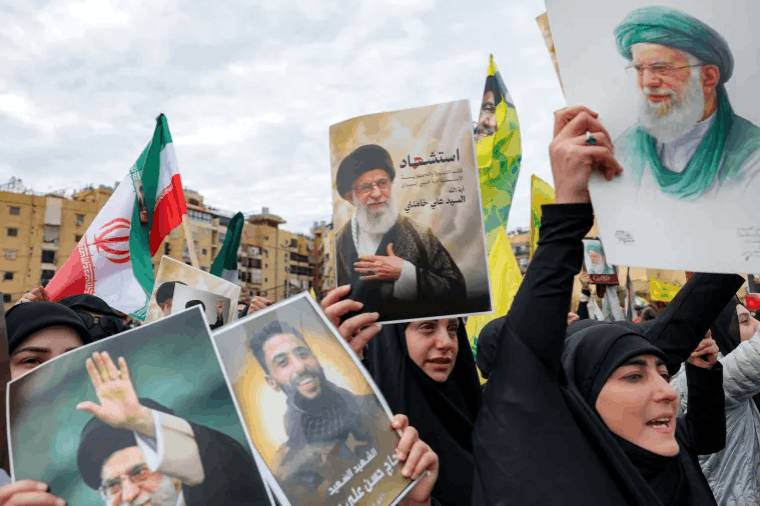
Hezbollah Vows to Confront US & Israel Over Khamenei Killing
Tensions in the Middle East escalated sharply after reports and claims circulated regarding the killing of Iran’s Supreme Leader, Ali Khamenei. While there has been no official confirmation from Iranian state authorities about such claims at the time of reporting, the Lebanese armed group Hezbollah has issued strong warnings directed at the United States and Israel.
In a televised address, Hezbollah’s Deputy Secretary-General Naim Qassem said the group would not remain silent in the face of what it described as “aggression” against Iran’s leadership. He stated that Hezbollah considers any attack on Iran’s Supreme Leader as a serious escalation that could destabilize the entire region.
Hezbollah’s Position
Hezbollah, which is backed by Iran, has long maintained a strategic alliance with Tehran. The group has fought multiple conflicts with Israel and has frequently accused both Israel and the United States of targeting Iranian interests in the region.
In his remarks, Qassem said Hezbollah is prepared to “confront aggression” and stand alongside Iran if tensions escalate further. However, he did not outline specific military steps or confirm immediate retaliatory action.
Regional Implications
The United States and Israel have not publicly responded to Hezbollah’s latest warning statements. Meanwhile, analysts caution that inflammatory rhetoric could further strain an already volatile regional environment.
Iran remains a key power in the Middle East, and any confirmed development involving its Supreme Leader would have profound political, military, and economic consequences across the region.
Current Situation
At present:
-
There is no verified confirmation from Iranian officials regarding the reported killing.
-
Hezbollah has issued statements signaling readiness to confront perceived threats.
-
Regional governments are closely monitoring developments.
-
Diplomatic observers warn of possible escalation if misinformation or unverified claims fuel tensions.